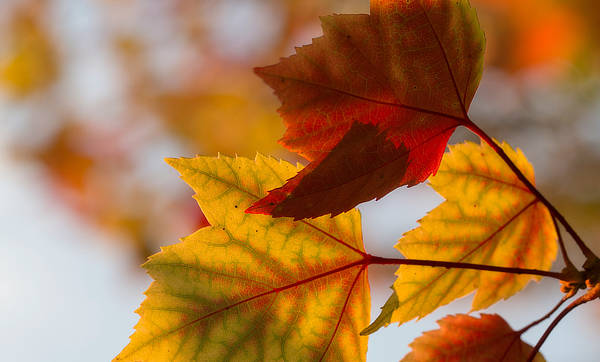
Photo by Aaron Burden on Unsplash
• Fall and its Relationship with Traditional Chinese Medicine •
Is the changing of the seasons something that practitioners pay close attention to, and if so why?
Tara: Being attuned to nature is a big part of Chinese medicine. Each season has an influence/purpose/intention. Fall is considered a transitional season. Moving from the peak energy of the summer into the slowing down of fall. Autumn is a season about releasing and letting go. Think..leaves falling from the trees.
Aimee: Yes, definitely. As a practitioner I pay a lot of attention to the changing of the seasons. With the change to Fall, I think about the lungs and the emotion of grief.
In our area there can be a lot of mold and allergens that affect people’s lungs. Changes in temperature can test our immune system. I see a lot of patients with allergies, colds and flu’s.
Grief is the emotion of the lungs. There is a sort of grieving to the leaves falling and the end of summer, even though we may be excited about the fall. It’s a bitter sweet transition that can bring up lots of emotions.
CJ: Practitioners pay attention to external conditions, among those are the change of the seasons. Some examples are temperature, precipitation, humidity, wind. All of these can affect the body and cause or exacerbate ailments. In Chinese medicine we call wind the “mother of all pathogens,” because it carries heat, cold, and damp. It can penetrate the defensive layer. So in short, yes, we consider the change of season, how it contributes to what we’re seeing in the clinic, and how we should advise our patients.
What is something you do personally when transitioning from late summer to fall from a TCM perspective?
CJ: This time of year carries drastic shifts in temperature, you’ll see highs in the 70s and lows in the 40s. So I always have a sweatshirt with me to cover up and avoid wind. I also change my diet, with the cooler temperatures I cut out any unprepared, raw food and start eating cooked easy to digest meals.
Aimee: The first thing I do is pull out my scarves and start covering my neck. This helps protect my immune system as the temperatures change. I switch my diet to less raw foods and start integrating more soups and stews. I also like to get cozy at home with more rest and relaxation.
Tara: This time of year is the time to accessorize. Layers and scarves. Scarves are important in the fall, as they protect the neck from wind. Your grandmother was right when she told you to wear a scarf or you’ll catch cold. That stiff neck or headache you get right before you get a cold, that’s wind in Chinese Medicine. So I keep my neck warm. I also like to make a lot of soups and stews this time of year.
Does autumn correlate with any internal organs?
Aimee: Yes. The Lung. Emotion of grief.
CJ: The Lung
Tara: Yes. Lung and Large Intestines are the organs that correlate with this season. The Lung governs breathing and the movement of Qi throughout the body. It’s Yang counterpart is the large Intestine which is responsible for, you guessed it: elimination, releasing, letting go.
Are there any other elements that correlate with autumn and Chinese medicine? ( colors, smells, plants, taste)
Aimee: Metal. Control.
Tara: Color: White, Smell: Putrid, Emotion: Grief
CJ: White, Pungent/Acrid
What is your favorite autumn soup recipe?
CJ: Butternut squash soup
Aimee: Chicken soup. Beef stew
Tara: This recipe is in heavy rotation at home when it comes to nourishing soups: gimmesomeoven.com/cozy-autumn-wild-rice-soup/
What is your “go to” Chinese herb recommendation for autumn?
Tara: Jade Windscreen/Yu Ping Feng San. I like to recommend this formula just before the change of seasons as an immune booster before the cold and allergy season. A good rule of thumb is start a course of this formula on Valentine’s Day and again at Fourth of July. Keep a bottle handy for those days when you think you might be coming down with something, and then make an appointment to get acupuncture.
Aimee: It’s very common for people to have a cough or cold this time of year. I recommend Yu Ping Feng wan as a preventative, Qing Qi Hua Tan wan for cough, Bi Yan Wan for sinus issues, and Pe Min Gan wan for allergies.
CJ: Sang Bai Pi (Mulberry Root Bark)
In 2 sentences or less describe your ideal autumn day.
Aimee: A day where the temperature is slightly cool but warm enough that I can sit in the sun and warm my skin. Maybe some light yard work. A drive on the parkway and then settling in at home with a home cooked dinner and a movie.
Tara: The ideal autumn day is a cool, crisp morning that warms up in the afternoon and slowly cools down. Almost any day during the fall in Asheville 🙂
CJ: A scenic drive to an orchard, complete with some hot cider. Then a fire and snuggles with a loved one (pets count).
• Our Team •
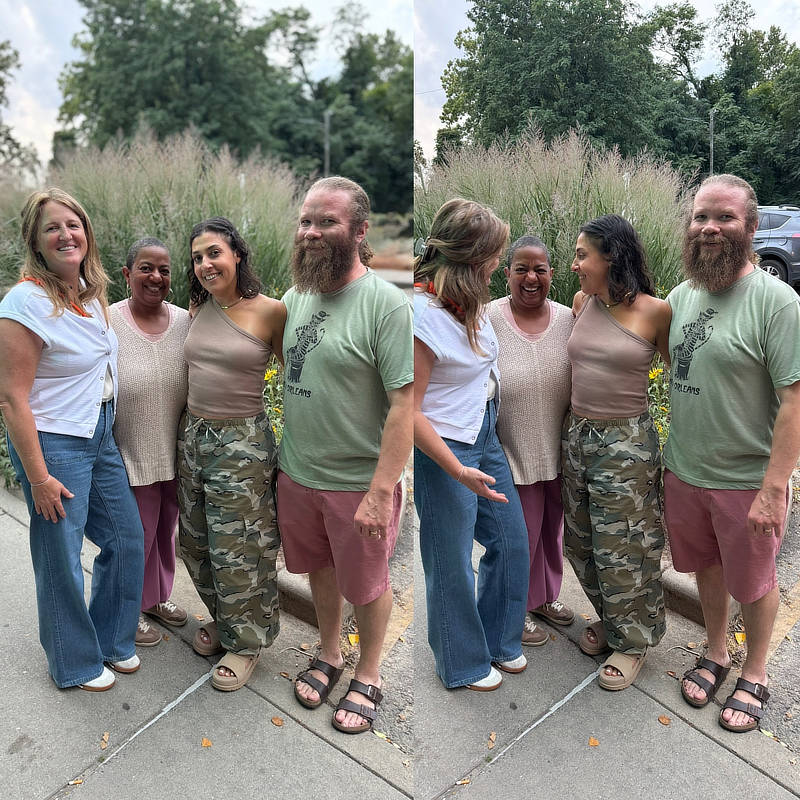
We hope you all enjoy the season, stay well, and of course, come visit us at the clinic. Book your appointment below.
With love and care,
The Peoples Acupuncture of Asheville team
• Clinic Hours •
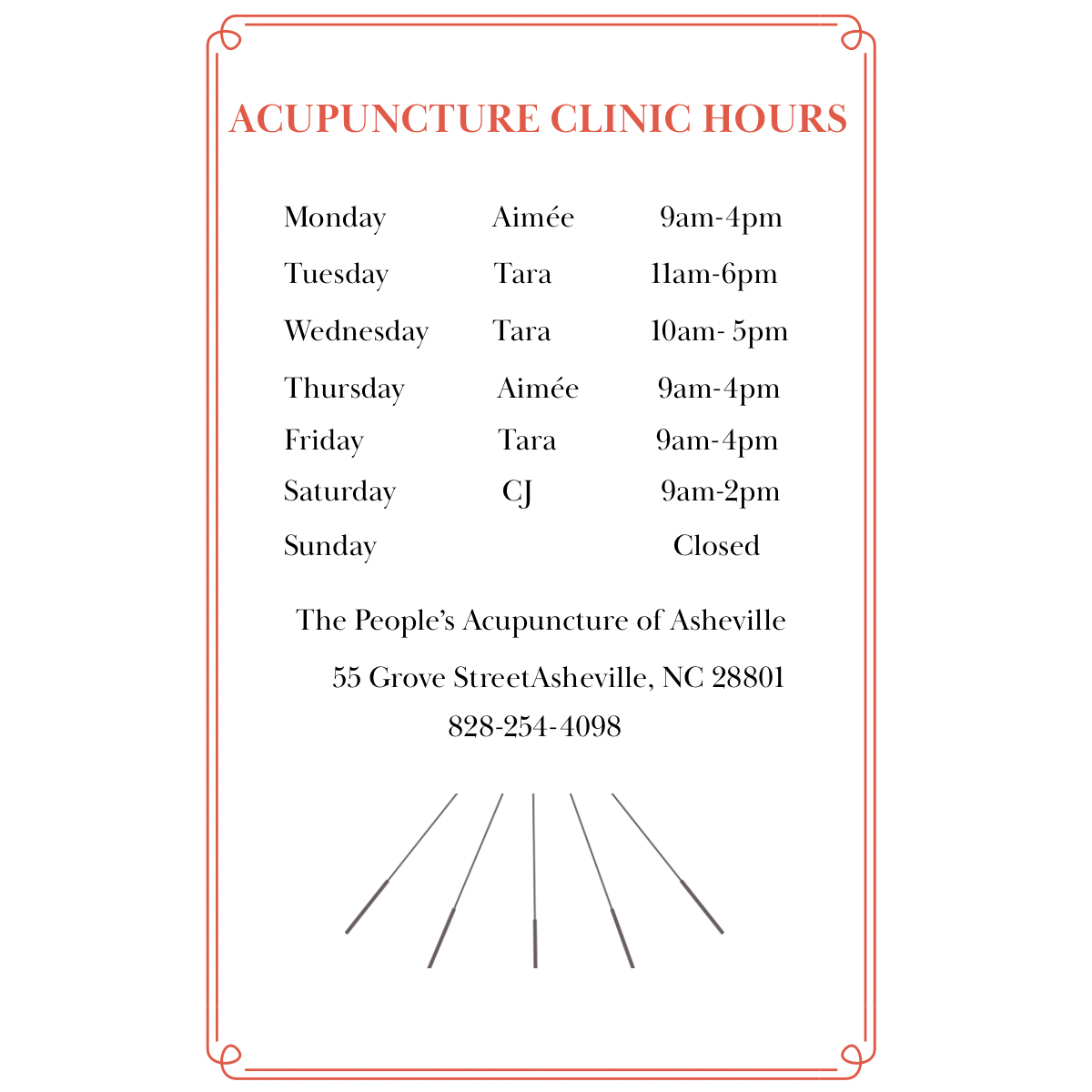
Book Now